
What is the definition of time?
Every time this question makes me think about time, and in no time it leaves me stranded with thousands more questions, hanging in this realm of space and time. Whenever I have asked someone this question, the reaction has been as if they had been slapped awake by an alarm clock. Is time just linked to that clock hanging on a wall powered by two cells? Are those 3 arms just there to make us run here and there every second of our lives? I hope it was that simple, but it is not. To define time, we need to dive into the philosophical and multi-dimensional ocean. Where time is a dimension and where you can jump back into the past or into the future. Wait, but what is past, present, or future? The moment I am writing this line, when will it turn into an event of the past? What is the actual time when I am about to enter the future? Do we exist in all of these time frames at once? If yes, then for what fraction of a second? These questions might appear to make no sense, but no question makes any sense until an answer is found. We need to be crazy enough to question without boundaries from the core of our curious minds.
In physics, time is defined as “what a clock reads” and is usually described as a fundamental quantity. But is it that simple?
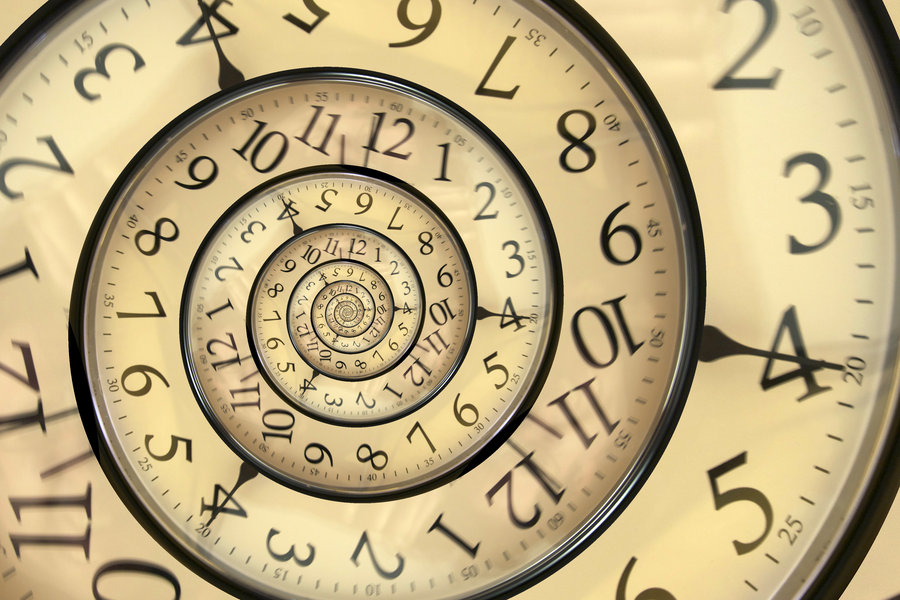
A single rotation of Earth around its axis signifies the length of the day, i.e 24 hours, and a single revolution of Earth around the Sun signifies a year. The months of the year originated as a way to mark time and break up the seasons into shorter periods based on the Moon’s orbit around the Earth. Months were first used and invented in Mesopotamia to measure the natural period related to the cycle of the moon. The Moon appears to move completely around the celestial sphere once in about 27.3 days as observed from the Earth, i.e., the time the Moon takes to complete one full revolution around the Earth with respect to the background stars. This is called a sidereal month and reflects the corresponding orbital period of 27.3 days. The moon takes 29.5 days to return to the same point on the celestial sphere with respect to the Sun because of the motion of the Earth around the Sun; this is called a synodic month.
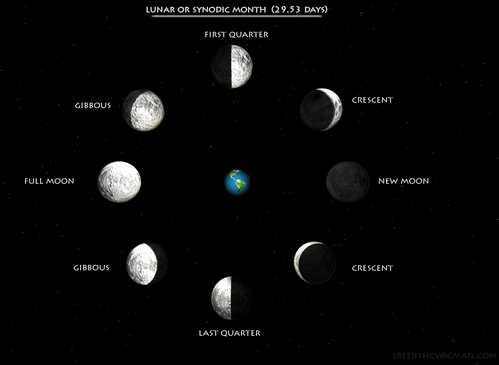
We have thus divided a year into months (thanks to the moon) and weeks, then into days, hours, minutes, and thus seconds and milliseconds, etc. We track all this with the help of clocks and calendars. That’s how we try to match our pace with time. But what if we were on Jupiter or Saturn, which has multiple moons, then what?
Time is measured by motion. Every planet has different periods of rotation and revolution; this simple concept thus shows that time is relative. A day on Mercury is 58.6 days long according to a person on Earth, but for a person on Mercury, it is just a single day having 1406.4 hours.
No one can feel, see, or touch time. At least, that’s how we give our views regarding something, by feeling, seeing, or touching it and thus measuring it. So how is it possible to define time in the first place? We measure it relative to the events that happen. Are we trying to define something that we have created in our minds? We measure the length of something with an appropriate scale, and in the same way, time, what I believe is, a measuring scale which is of no use except “measuring” or recording events.
But if it is so, then why do we talk about trips to the past or future? Suppose you experience every bit of time travel to the past, that when you followed a particular path while driving your car, and then in reverse gear you followed the same path, reaching the point from where you started. Suppose this also happens at the molecular level such that your age is reversed and that every event that happened while you were driving the car has also reversed. You will have to believe that you have reached your past. The past is relative to the events that occurred. Then you will compare it with time, measuring the periods in which all this happened. You will define it as time travel. What actually has happened or changed is with the events or their path, but not time itself; it’s just a perspective.
Talking about great minds, Einstein suggested that the speed of time can change depending on a) at what height you are(General relativity) b) at what speed you are moving(Special relativity) so this means time is relative.
James Chin-Wen Chou and his colleagues from the US National Institute of Standards and Technology in Boulder, Colorado, found that when they monitored two such clocks positioned just a foot apart in height above sea level, they found that time really does run more quickly the higher you are – just as Einstein predicted. “These precise clocks reveal the effects of gravitational pull, so if we position one clock closer to a planet, we also increase the gravitational pull, and time actually runs slower than for another, similar clock positioned higher up,” Dr. Chou said. “No one has seen such effects before with clocks, which is why we wanted to see if these effects are there. We would say our results agree with Einstein’s theory – we weren’t expecting any discrepancies and we didn’t find any,” he explained.
The atomic clocks used in the study are based on the tiny vibrations of aluminium atoms trapped in an electric field. These vibrations are in the same frequency range as ultraviolet light, detected by lasers, which effectively means that the atomic timepieces are optical clocks, accurate enough to measure billionths of a second and to keep time accurately over millions of years.(source:independent.co.uk)
The above-mentioned experiment measured time but did not define it.
Defining time as a dimension in which we can move backwards and forwards is another hypothesis.
As I started writing this article, the Sun was still high enough to light up my room. As I am about to complete this article, the Sun has almost set, and my heart has beaten almost 3240 times. If I want to talk in the language of the time, it took me 45 minutes according to the clock. Normally, the heart beats at a rate of 72 beats per minute. Tracking one’s heart rate can save lives, and that’s how important time is.
Maybe the clock is just the need of the “hour”, and even if it’s more than that, then we are nowhere near solving this mystery. It will take some ‘time’ to understand time. We are able to see something when we are face to face. If we need to face and thus understand the time, we need to overtake it and move faster than it. For that to happen, if it is ever possible, it will take a lot of patience and time itself.
What separates time from a simple clock concept is its relativity concept, and the other one is the possibility of time travelling through wormholes. A wormhole, in theory, might be able to connect extremely far distances, such as a billion light-years or more, short distances such as a few feet, different universes, and different points in time. These theories are based on solid science, but they always need solid pillars of experimentation.
Not past or future, but it is the present that is real and is as important as our urge to understand time. Time begins with new beginnings, just like the Big Bang 14 billion years ago. It is a discipline under which this Universe and we work. It is a necessity even if it is not a dimension.
Time is a journey. Have a great one.
Featured Image – Hubble Space Telescope image of the Hourglass Nebula

